 Grazerak Hub
Tactical Identity in Transition
As Grazer AK navigates through the current season, their tactical approach has become a focal point for both fans and analysts. The team has displayed flashes of brilliance but has also struggled with consistency, particularly in the final third. To better leverage their assets, a reassessment of their tactical identity is essential.
Formation and Structure
Currently, Grazer AK has favored a 4-2-3-1 formation, which provides a solid backbone while allowing for creative freedom in the attacking midfield. However, recent matches have shown that this setup can become predictable, making it easier for opponents to stifle their attacking movements. A possible shift towards a 4-3-3 formation could provide more dynamism and width, enabling wingers to exploit flanks and create more goal-scoring opportunities.
Midfield Dynamics
The midfield has been pivotal in Grazer's recent outings, yet there seems to be a disconnect between the defensive midfielders and the attacking trio. By introducing a more aggressive pressing style from the midfielders, Grazer AK could regain possession higher up the pitch, leading to quicker transitions into attack. Additionally, rotating players like C. Lichtenberger and F. Stolz between deeper and advanced roles could confuse opposition defenses and create overloads in critical areas.
Exploiting Width
One area that has been underutilized is the flanks. The wingers, while talented, have not consistently stretched defenses or provided enough service to the central striker. Encouraging wingers to cut inside while overlapping full-backs provide width could create a dual threat. This adjustment would not only open up space in the middle but also allow for more varied attacking patterns, essential for breaking down compact defenses.
Defensive Solidity
Defensively, Grazer AK has shown vulnerabilities in transition, often leaving space behind the full-backs when they venture forward. A more disciplined approach, with one of the midfielders dropping back to form a three-player defense during attacking phases, could mitigate this risk. This tweak would ensure defensive stability while still allowing for offensive contributions from the full-backs.
Set Pieces as an Asset
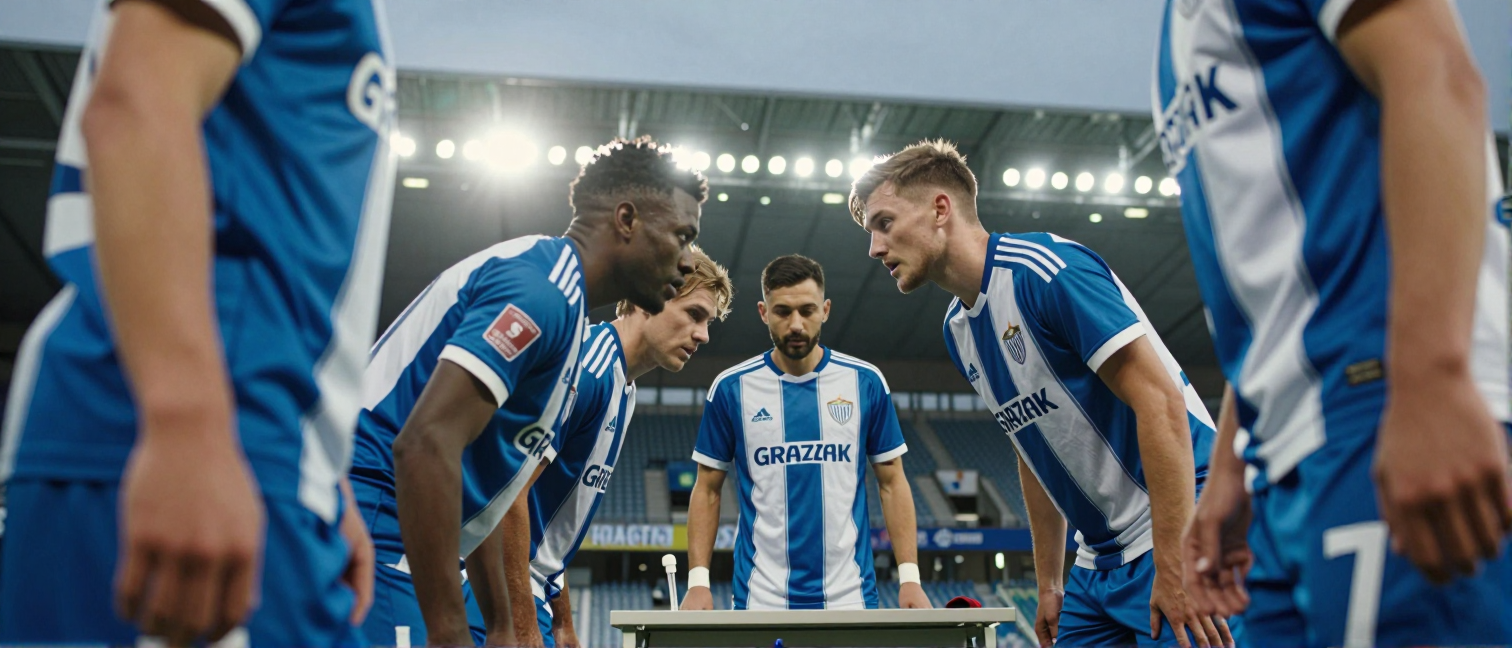
Another area ripe for improvement is set-piece execution. Grazer AK has the physicality and aerial ability to capitalize on corners and free-kicks, yet they have struggled to convert these opportunities into goals. Implementing more structured routines and encouraging players to attack the ball with conviction could enhance their threat from dead-ball situations, providing crucial goals in tightly contested matches.
Conclusion: Path Forward
In summary, Grazer AK's recent form indicates a need for tactical evolution. By adopting a more adaptable formation, enhancing midfield dynamics, exploiting width, tightening defensive coordination, and maximizing set-piece potential, the team can harness its strengths and address its weaknesses. As the season progresses, these strategic tweaks could be the key to unlocking the full potential of Grazer AK and solidifying their position in the league.