 Grazerak Hub
As Grazer AK navigates through the season, the club's recent form has sparked discussions around tactical efficiency and player utilization. While the team has demonstrated resilience, a careful analysis reveals opportunities for enhancement that could significantly impact their performance in the league.
Current Tactical Setup
Grazer AK has generally employed a 4-2-3-1 formation, which provides a solid defensive base while allowing for attacking flexibility. However, in recent matches, the midfield duo has struggled to maintain possession, often leaving the front line isolated. The reliance on wing play is evident, yet opposing defenses have adapted, limiting the effectiveness of wide players. Therefore, a slight modification to a 4-3-3 formation could provide the necessary balance between defense and attack, allowing for more fluid transitions and better support for the forwards.
Midfield Dynamics
The current pairing in the midfield lacks a creative spark, often reducing the team's ability to break down compact defenses. Introducing a more dynamic playmaker alongside a holding midfielder could help facilitate quicker transitions from defense to attack. This change would not only enhance possession but would also provide the attacking trio with more opportunities to exploit spaces behind the opposition’s backline.
Emphasizing Pressing
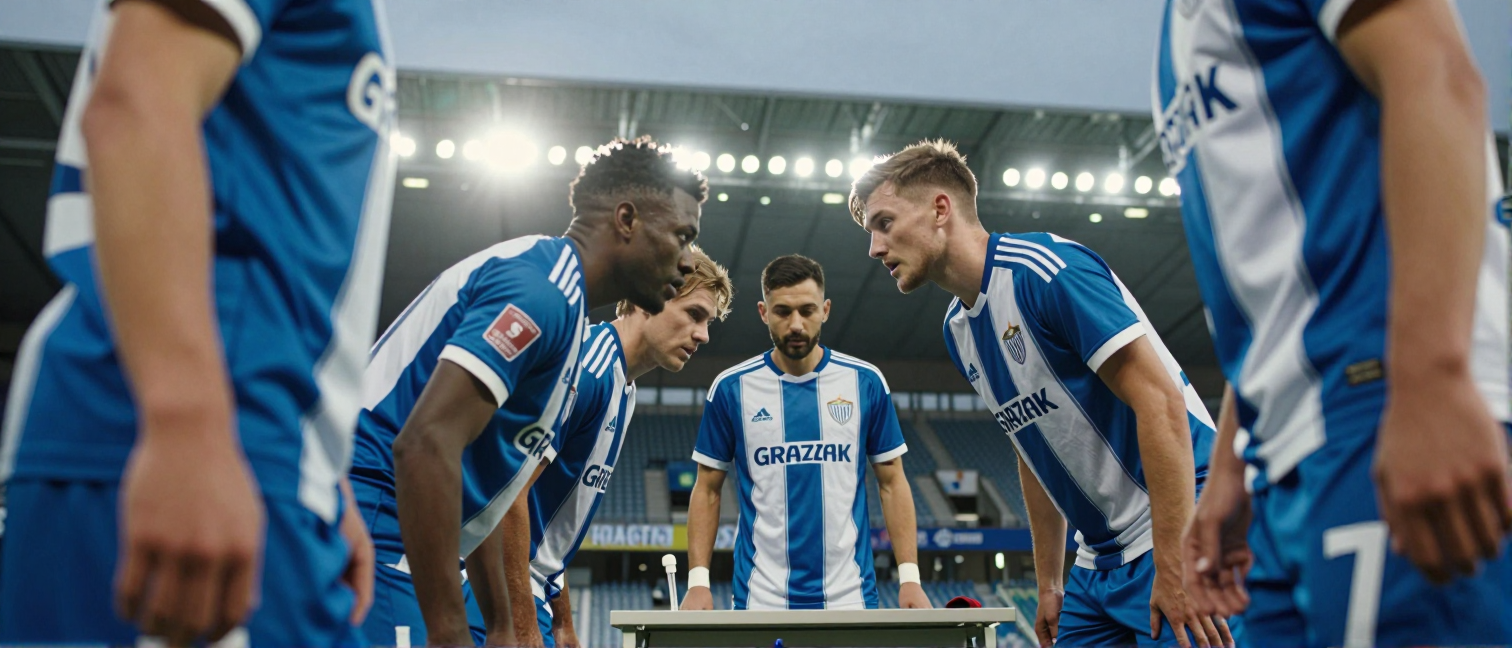
Another area that requires attention is the pressing strategy. While Grazer AK has shown glimpses of effective pressing, it often lacks coordination and intensity, allowing opponents to bypass the initial line of pressure. Implementing a more coordinated high press, particularly when playing at home in the Stadium, could unsettle opponents and create goal-scoring opportunities. Encouraging forwards to initiate pressing traps can force defensive errors, leading to quick counter-attacks.
Width and Depth in Attack
Utilizing the full width of the pitch is crucial for Grazer AK, particularly against teams that play a compact defensive shape. The wingers must maintain their positions wide, drawing defenders out of position and creating gaps for midfield runners to exploit. Moreover, the full-backs should be encouraged to overlap, providing additional width and depth in attacking phases. This tactical adjustment could create mismatches against slower defenders, allowing for more 1v1 situations in wide areas.
Defensive Stability
On the defensive end, while the central pairing has been relatively solid, there is a need for better communication and awareness, especially during set pieces. Training sessions focused on defensive organization and set-piece scenarios can help mitigate risks. Additionally, incorporating a more aggressive stance when defending higher up the pitch can limit the opposition's time on the ball and reduce their chances of launching effective counter-attacks.
Conclusion
In summary, while Grazer AK has displayed moments of quality, strategic tweaks in formation, midfield dynamics, pressing intensity, and attacking width can significantly enhance their chances of success moving forward. By addressing these key areas, the coaching staff can harness the full potential of the squad, setting the stage for a more competitive season ahead.